


Key takeaways
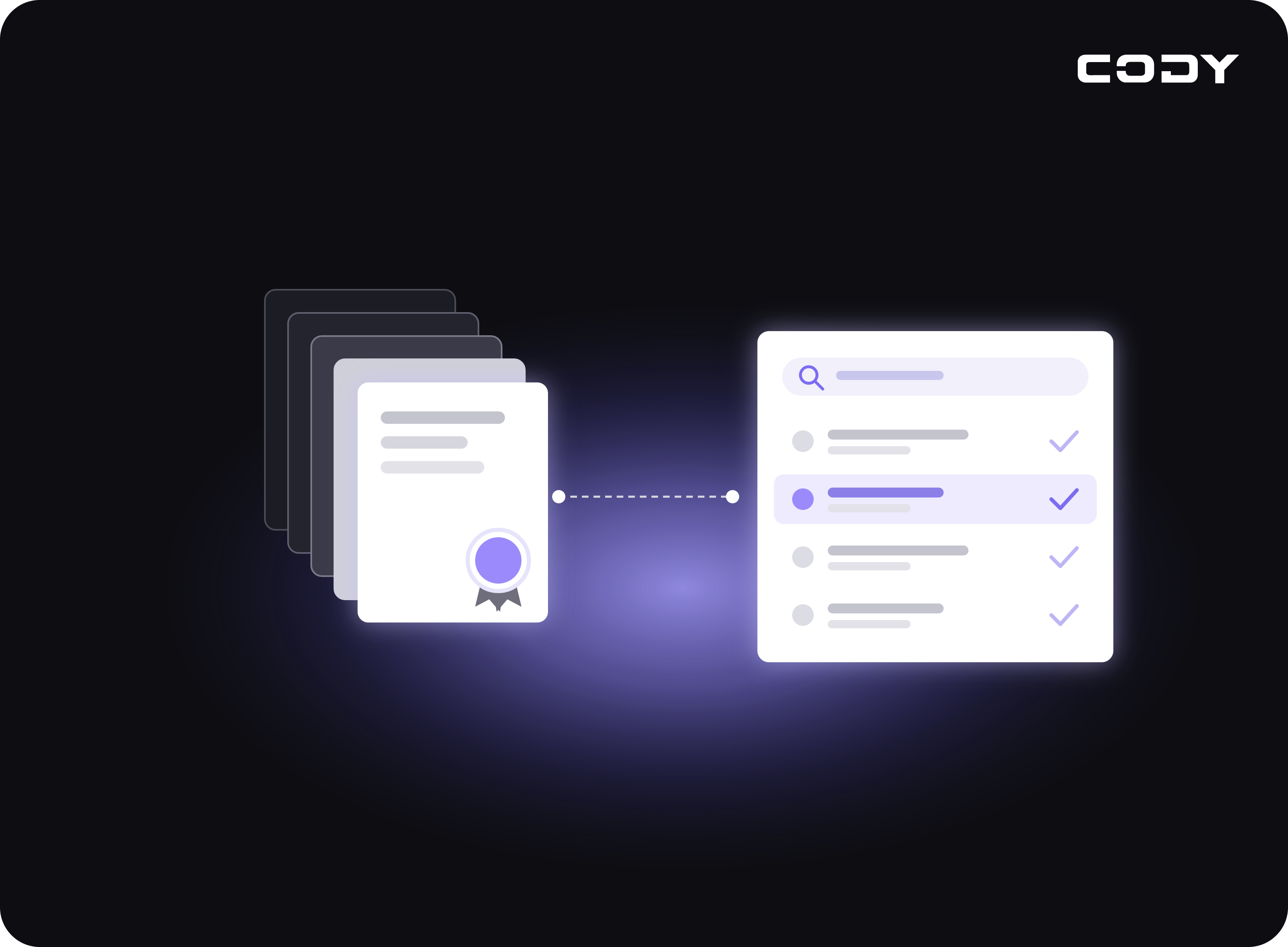
- An ISO certificate shows that an outside auditor checked the vendor's management system. It doesn't approve the product.
- Scope, edition and dates decide whether a certificate covers your deal, and you can check all three before the security review starts.
- ISO/IEC 27001 and System and Organization Controls (SOC) 2 cover similar ground with different instruments, so ask which one your security team already accepts.
Most vendor security questionnaires have a line that says "List your certifications." When the answer is ISO certification, it means an accredited certification body audited the company's management system against a specific ISO standard and found it conforming.
ISO writes the standards but issues no certificates. A certificate runs on a three-year cycle, with surveillance audits every year and a recertification audit in year three. A row of logos shows none of this, and scope, edition and dates are where most certificate packs fall apart.
What Is ISO Certification (and What It Isn't)
ISO certification covers how a company plans, controls and improves a type of work, not the product itself. It isn't a license or a legal permit either.

Three parties are involved. ISO develops the standards. A certification body (also called a registrar) audits the company and issues the certificate. A national accreditation body checks that the certification body is competent to do that work (ISO TC 176). ISO's help center puts it plainly: "ISO itself does not perform certifications or accredit certification bodies" (ISO). A certificate that says "issued by ISO" is a reason to ask more questions.
In procurement, the word to watch is "compliant." A vendor can write "ISO 27001 compliant" after reading the standard and deciding it meets it, with nobody outside the company checking. "Certified" means an outside auditor did check, against a named edition, for a stated scope. When a questionnaire answer says "compliant," ask whether a certificate exists and who issued it.
A certificate shows that the management system exists, is documented and is audited on a schedule.
ISO Certification Types That Matter for a Software or AI Vendor
Five types of ISO certification come up when you buy software, IT services or AI work: ISO 27001 (ISO/IEC 27001) for information security, ISO 42001 (ISO/IEC 42001) for AI management, ISO 20000-1 (ISO/IEC 20000-1) for service management, ISO 9001 for quality and ISO 14001 for the environment. The table maps each of these ISO certification types to a question in your review, with SOC 2 alongside for comparison.
Standard | What it certifies | The question it answers in your review |
ISO/IEC 27001 | An information security management system (ISO) | Does the vendor manage the security of information, including yours, through an audited system? |
ISO/IEC 42001 | An AI management system (ISO) | Does the vendor govern how it builds and runs AI through an audited system? |
ISO/IEC 20000-1 | A service management system covering the planning, design, transition, delivery and improvement of services (ISO) | Will the vendor run the service it sells you through a defined, audited process? |
ISO 9001 | A quality management system aimed at consistently meeting customer and regulatory requirements (ISO) | Does the vendor have a controlled way to deliver what it promised and fix what goes wrong? |
ISO 14001 | An environmental management system (ISO) | Does the vendor manage its environmental impact, if your supplier policy asks? |
SOC 2 (not an ISO standard) | A certified public accountant's (CPA's) examination of a service organization's controls against the Trust Services Criteria: security, availability, processing integrity, confidentiality and privacy (American Institute of CPAs (AICPA)) | How do the vendor's controls measure up against criteria your auditors already use? |
ISO/IEC 27001 carries the most weight in a security review. ISO 9001 and ISO/IEC 20000-1 matter more to procurement and to the team that will live with the service. Ask about ISO/IEC 42001 when the vendor builds or runs AI on your data.
SOC 2 is a fair alternative to ISO/IEC 27001, and for some buyers the better one. If your auditors work with the Trust Services Criteria of the AICPA, a SOC 2 report fits their process directly. An ISO/IEC 27001 certificate can be looked up in a public database, which helps when you buy across regions.
How ISO Certification, Surveillance and Recertification Audits Work
The company is audited at the start, checked every year and fully re-audited every three years, and the certification body can withdraw the certificate in between. A certificate is a cycle of audits, so one passed exam doesn't keep it valid.
- The company builds its management system. Policies, owners, running processes and records that show the system works.
- It hires an accredited certification body. Accreditation is what makes the certificate checkable later (ISO TC 176).
- Stage 1 of the initial audit. The initial audit has two stages (International Accreditation Forum (IAF) MD 5). The Stage 1 results go into a written report, and the certification body reviews it before deciding whether to go ahead with Stage 2 (UKAS TPS 74). A vendor that has only finished Stage 1 is not certified.
- Stage 2 of the initial audit. This is normally the longer stage (IAF MD 5). If the system conforms, the body issues the certificate and the three-year cycle starts (EA).
- Surveillance audits every year. Certified organizations are audited annually, either once a year or twice about six months apart. Each surveillance audit takes about one third of the initial audit time (ANAB).
- Recertification in year three. A recertification audit, at about two thirds of the initial audit time, starts the next cycle (ANAB).
Two details catch buyers out. Some certificates carry no expiry date and stay valid unless withdrawn (ANAB). And editions change. Under the IAF transition rules, "all certifications based on ISO/IEC 27001:2013 shall expire or be withdrawn at the end of the transition period," which ended October 31, 2025 (IAF MD 26). ISO 9001:2026 was published on September 16, 2026, and certified organizations move to it "within the time frame set by their certification cycle" (ISO). A 9001:2015 certificate is still valid during that window, so judge it by its dates.
How to Verify a Vendor's ISO Certificate
Start with the public database, then read the certificate itself for scope, edition and dates. If something doesn't match, ask the certification body. Run these checks before the certificate goes into your review file:

- Search IAF CertSearch. IAF CertSearch is IAF's global database for checking certificates issued by accredited certification bodies. Search by company name or certificate number and read the validity details.
- Check the certification body is accredited. Find out who issued the certificate and who accredits that body. If it isn't clear, ask the certification body, the accreditation body, IAF or your national accreditation body (ISO).
- Read the scope on the certificate. This is the check that matters most, and the database won't do it for you. Confirm that the scope covers the entity, the locations and the service you are buying. A certificate for one office or one product line says nothing about the rest of the company.
- Ask for the Statement of Applicability (ISO/IEC 27001). The standard requires the vendor to produce one (clause 6.1.3 d) after comparing its security controls with the reference set in Annex A (IAF MD 26). An article in the journal of ISO's information security committee tells customers to examine it alongside the scope "to be sure your specific requirements are covered" (ISO/IEC JTC 1/SC 27).
- Check the edition. ISO/IEC 27001 should be the 2022 edition. For ISO 9001, note whether it is 2015 or 2026.
- Check the dates. Look at the issue date, the expiry or recertification date, and when the last surveillance audit happened. With no expiry date, confirm with the certification body that the certificate hasn't been withdrawn (ANAB).
- Match the legal entity. The company name on the certificate should be the one on your contract.
What an ISO Certified Software Company Saves You in Procurement
An ISO certified software company has already had its management system checked by an outside auditor. Your analyst can mark the matching sections of the questionnaire as covered by evidence (the certificate, the Statement of Applicability and the date of the last surveillance audit) and send follow-up questions only on scope gaps and deal-specific items such as data residency.

A valid, in-scope certificate usually covers these questionnaire or tender items:
- Whether the vendor has a documented, owned management system for security, quality or service delivery.
- Whether that system is independently audited, by whom, and how recently.
- Whether the vendor tracks incidents, nonconformities and corrective actions through a defined process.
It doesn't replace:
- Your contract terms on data. The certificate says how the vendor manages information. What the vendor may do with your personal data belongs in your data processing agreement.
- Technical testing of what you buy. A management system audit doesn't test the application. If your policy asks for a recent penetration test report, ask for it separately.
Send the checklist above to procurement with the questionnaire, and drop any questionnaire item the certificate already covers.
Cody Solutions' Five ISO Certificates
Cody Solutions is an ISO certified software company with five certificates: ISO 27001, ISO 42001, ISO 20000-1, ISO 9001 and ISO 14001. They're listed here by edition with the part of your review each one feeds.
Certificate | Area | Where it fits in your security review and procurement |
Information security | The information security section of your questionnaire. Ask for the certificate and the Statement of Applicability. | |
AI management | The AI governance questions, such as how models that touch your data are assessed, approved and monitored. Ask which AI services the scope includes. How 42001 relates to the EU AI Act is covered in AI Act compliance: EN 18286, ISO/IEC 42001 or AIA Cert. | |
IT service management | Service levels and incident handling once the automation is live. Ask which services the scope includes. | |
Quality | Change control and corrective actions during delivery. | |
Environment | Supplier sustainability clauses in your tender or policy. |
Run the same checks on these as on any vendor's: search the database, read the scope, and check the dates against your own requirements. If your security review or tender is asking for these certificates, we can walk through them with you for an AI or automation project. Let's talk.
FAQ
Is ISO certification mandatory? No. ISO's quality committee states that "certification to ISO 9001 is not a requirement" of the standard (ISO TC 176). It becomes one when a customer, a tender or a supplier policy asks for it.
How long is an ISO certificate valid? A certification cycle lasts three years, with yearly surveillance audits and recertification in year three (EA).
Should I ask for ISO 27001 or SOC 2? Ask for the one your security team already works with. ISO/IEC 27001 certifies a management system and can be checked in IAF CertSearch; SOC 2 is a CPA's report on controls. Either can settle the security section of a review.
What is the difference between ISO certified and ISO compliant? "Certified" means an accredited body audited the system and issued a certificate you can verify. "Compliant" is the company's own claim.
Does ISO 42001 cover the EU AI Act? ISO/IEC 42001 is a management system standard; the EU AI Act is a regulation. How they relate is explained in AI Act compliance: EN 18286, ISO/IEC 42001 or AIA Cert.
Which ISO certifications should a software vendor have? Start with ISO 27001 for the security review. ISO 9001 and ISO 20000-1 matter to procurement and to the team that will run the service, and ISO 42001 matters when the vendor builds or runs AI on your data. ISO 14001 counts when your supplier policy asks for it.