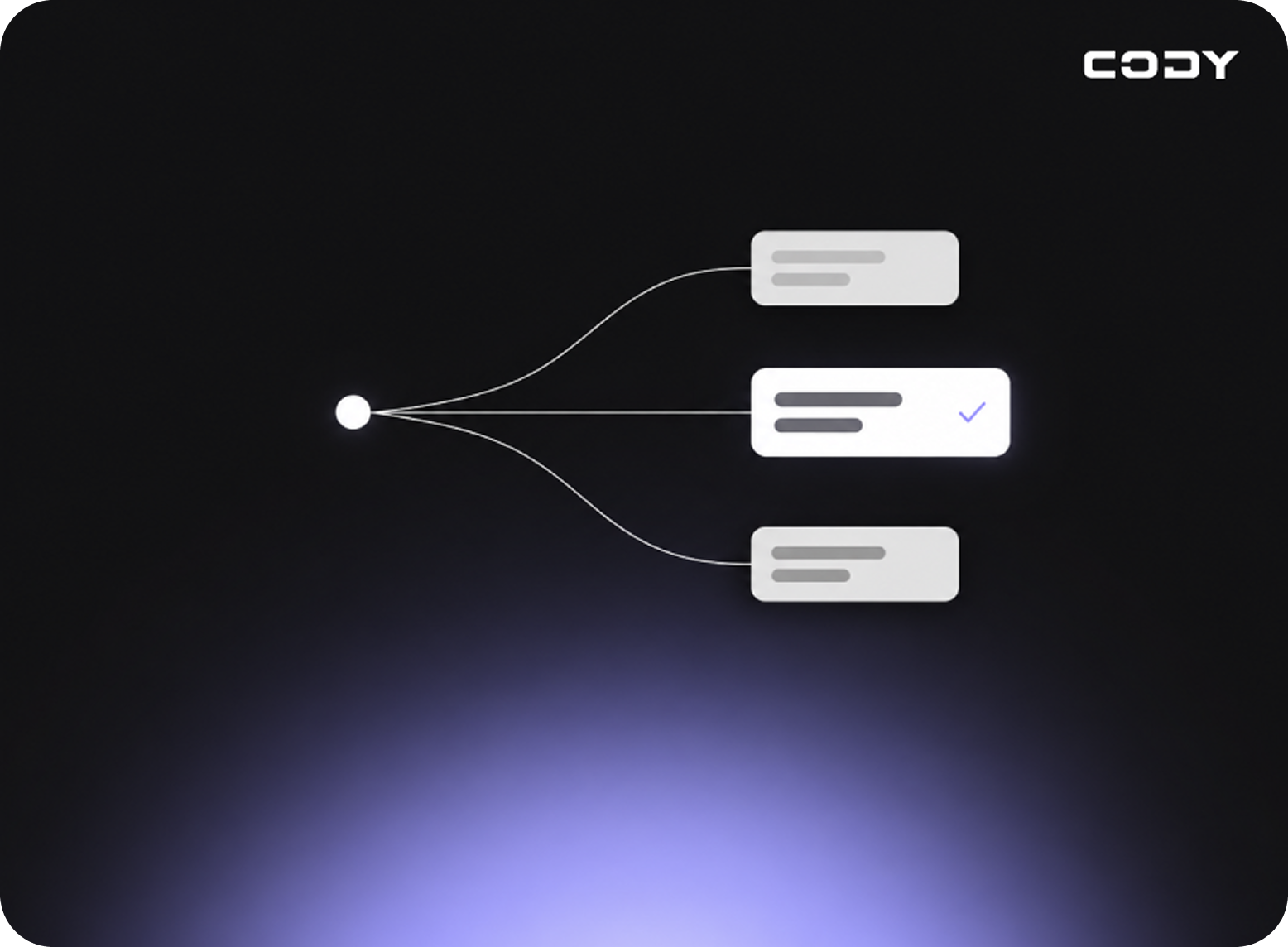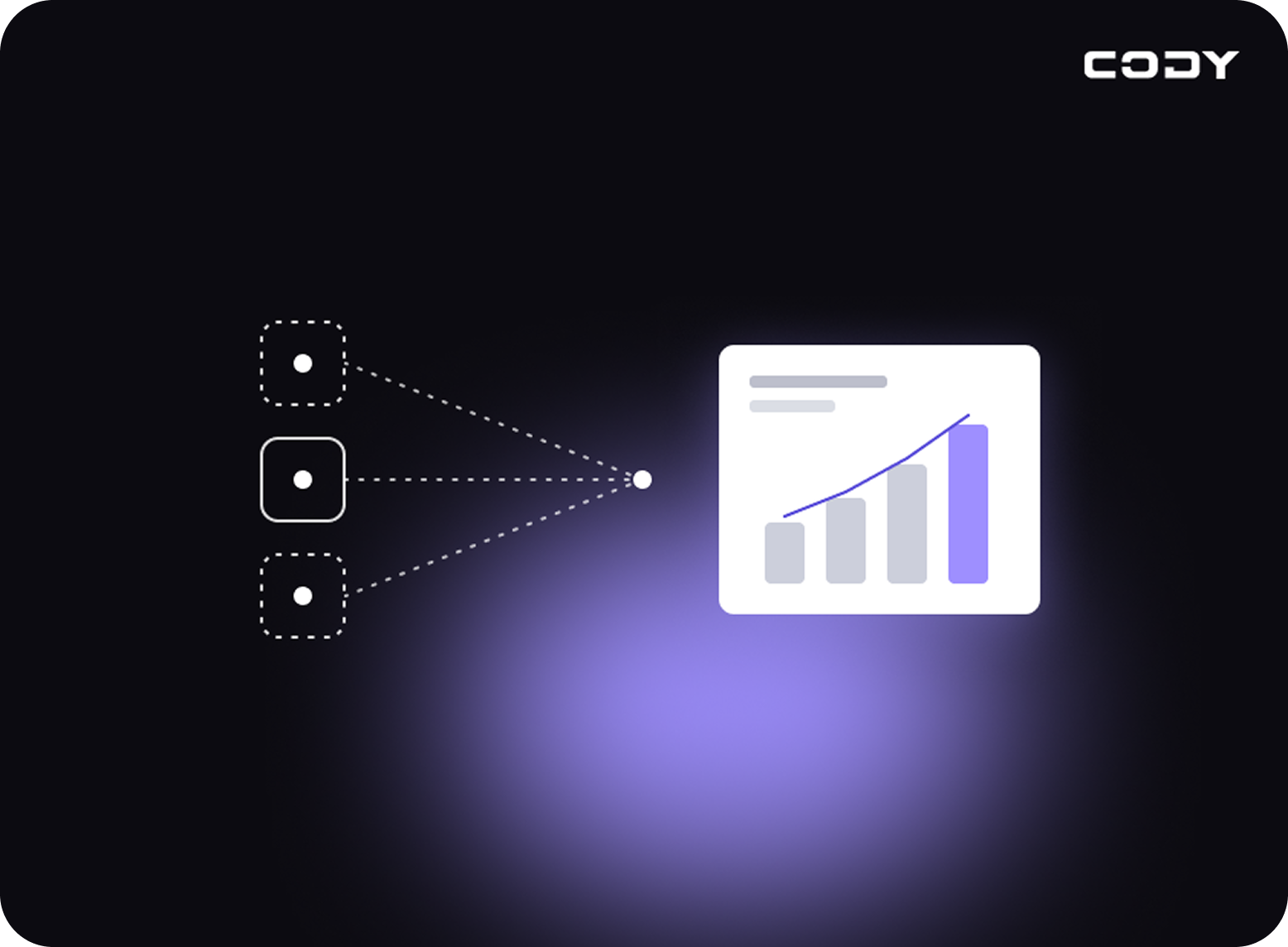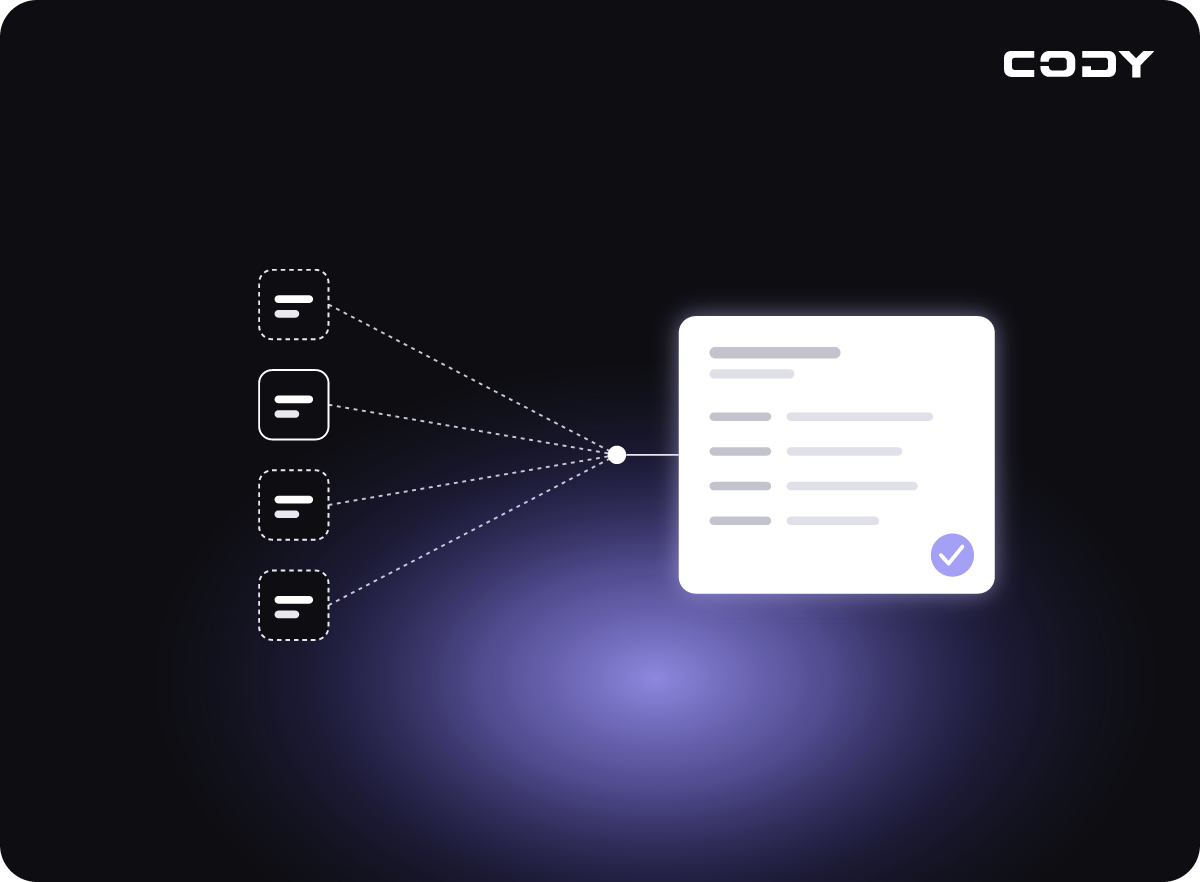



Order-to-cash (O2C) is everything that happens between a customer placing an order and the money landing in your account: order intake, order entry, fulfillment or transport, invoicing and collections. Order-to-cash automation with AI means software agents take over the manual steps in that chain, such as reading orders from email, PDF and WhatsApp, entering them into the enterprise resource planning (ERP) system, drafting invoices and sending payment reminders, while your team approves and reviews their work.
For most mid-market distributors and logistics companies, the best place to start is order entry.
What Is Order-to-Cash Automation?
Order-to-cash automation replaces the hand-offs between people and systems in the O2C cycle with software that reads, enters, checks and sends information. AI extends it to steps that older automation couldn't touch, because orders rarely arrive in a clean, structured format.
In a mid-market distributor or logistics company, the cycle rarely lives in one system. A typical order-to-cash flow in logistics looks like this:
- Intake: orders arrive by phone, WhatsApp, email or a website form.
- Entry: a sales coordinator types them into the customer relationship management (CRM) system, and the order is then passed to the transport management system (TMS) or the ERP.
- Fulfillment: operators contact carriers or the warehouse, book capacity, arrange insurance and sign contracts.
- Confirmation: after delivery, the account manager checks with the customer that everything arrived.
- Invoicing: accounting issues the invoice, often re-keying data that already exists in two other systems.
- Collections: when a customer forgets to pay, accounting asks the manager to send a reminder, and the manager sends it when they find the time.
Every step in that list involves a person copying data from one screen to another. Each copy costs minutes, adds a chance of error and pushes the cash further out. Distributors have the same shape with a warehouse instead of carriers: orders by email and PDF, entry into the ERP, picking and shipping, invoicing, collections.
AI sits on top of the systems you already run. It doesn't replace your ERP, CRM or TMS. It connects them and does the copying, so your people spend their time on exceptions.
Which Order-to-Cash Steps Can AI Automate First?

Start where the volume is highest and the rules are clearest: order intake and entry. Then move down the chain to invoicing and payment reminders. Pricing exceptions, credit decisions and disputes stay with people, who get better tools for them.
O2C step | How it runs today | With AI | What to measure |
Order intake | Orders arrive by phone, email, PDF, WhatsApp and web forms; someone reads each one | An agent reads every channel, extracts customer, items, quantities, dates and addresses, and creates a draft order | Orders per day per coordinator; time from message to draft order |
Order entry | Data is typed into the CRM, then again into the ERP or TMS | The draft order is checked against the customer master and price list and written to the ERP or TMS; only mismatches go to a person | Manual touches per order; entry error rate |
Order exceptions | Missing SKUs, wrong prices or unknown addresses are handled by email back and forth | Exceptions land in one screen with the original message and a suggested fix; a person approves | Share of orders with exceptions; time to resolve |
Fulfillment hand-off | Operators re-enter orders to book carriers or the warehouse | Bookings are prepared from the order data; the operator confirms | Time from order to booking |
Delivery confirmation | Account managers call or email customers after delivery | Confirmation requests go out automatically; replies update the order status | Share of deliveries confirmed within a day |
Invoicing | Accounting re-keys order and delivery data into the invoice | The invoice is drafted from the confirmed order and delivery; accounting reviews and sends | Time from delivery to invoice; invoice error rate |
Collections | Reminders depend on someone noticing an overdue invoice | Reminders follow agreed rules and tone; anything unusual goes to a person | Days from invoice to cash; overdue share |
Order entry comes first for a few reasons. It runs every day in volume, so small time savings per order add up fast. Its result is easy to check, because the order in the ERP either matches the customer's message or it doesn't. And everything downstream depends on it: clean order data makes invoicing and collections easier to automate later.
Pick one order channel and one order type, automate it and measure it before adding the next. If an earlier pilot stalled before it reached live data, why most AI pilots never reach production covers the usual reasons.
How Does AI Read Orders From Email, PDF and WhatsApp Into the ERP?
An AI agent reads each incoming message the way a coordinator would. It identifies the customer, the products, the quantities, the dates and the delivery details, then checks them against your master data before anything reaches the ERP. Clear orders are written to the system, and unclear ones go to a person with the open question highlighted.

In practice, it works in four steps:
- Capture every channel in one place. Email inboxes, PDF attachments, web forms and messaging apps feed one queue. WhatsApp can be connected through a service such as Twilio, so customer conversations land in the system instead of on a manager's phone. Phone orders can be handled from the call recording.
- Extract the order. A language model reads the message or document, whatever its layout, and pulls out the fields the order needs. It handles a free-text email that asks for last week's order plus a few extra cases as well as the structured PDF from a large customer.
- Validate against your data. The agent matches the customer, product codes, prices and delivery addresses against the ERP or CRM. If the customer writes a product name you don't use internally, the agent maps it to your SKU or asks.
- Write or escalate. Orders that pass every check are created in the ERP or TMS through its API, its database or, where neither exists, the same screens your team uses. Orders that fail a check go to an exception screen with the original message next to the draft.
Here is how that could look in a logistics company that takes most orders by phone. A forward-deployed engineer (FDE) would sit with the sales team, watch how phone orders are taken and build software that turns each call recording into a completed order form. The coordinator could hang up and take the next call instead of spending minutes typing. WhatsApp orders would come next, and the work would continue one sub-process at a time.
Your team keeps control throughout. They decide which checks an order must pass before it is written automatically, they review every exception, and they can see every action the agent took. All of it is visible in one intelligence platform connected to the CRM, the TMS and the accounting system, where you can follow the whole process and see which steps work.
How Do You Automate Invoicing and Payment Reminders Without Losing Control?
Automate the preparation and keep the approval. The agent drafts invoices from confirmed orders and deliveries and sends payment reminders by rules your finance team sets. People approve what goes out until the numbers show the drafts are reliable, then decide which cases can go out without review.
Invoicing. Most invoice errors in order-to-cash come from re-keying: a quantity changed on delivery, a surcharge that never made it from the TMS, a price updated in the CRM but not in accounting. When the invoice is drafted from the same order and delivery data the rest of the process uses, those errors have fewer places to come from, and accounting reviews a ready draft instead of building one.
A practical rollout looks like this:
- First: the agent drafts every invoice, and accounting reviews each one before it is sent.
- Next: invoices that match the order exactly go out after a quick check; anything with a change, a credit note or a new customer still gets a full review.
- Later: your CFO decides which categories can be sent automatically, based on the error rate you've measured.
Payment reminders. Collections often depend on someone noticing an invoice is overdue and finding time to write to the customer. An agent can track due dates, send the first reminder in the tone you choose and pass the case to the account manager when a customer replies with a question or a dispute. Your team sets the rules: when the first reminder goes out, which customers get a phone call instead, and what is never sent without a person reading it.
Put these controls in from day one:
- An approval step for anything above an amount you set, and for new customers.
- A full log of what the agent drafted, what a person changed and what was sent.
- A pre-production environment where your team tests each change before it reaches your live systems.
- One named person in finance who owns the reminder rules.
If you sell in markets where structured e-invoicing is becoming mandatory, plan for it at this step: the order and delivery data that feeds the invoice draft can also feed the required format.
How Do You Measure the Result?
Measure the process before you change it, then measure the same numbers on live data after each release. Four numbers cover most of order-to-cash: time and cost per order, error rate, exception rate and days from order to cash.

Agree on the baseline at the start, with the people who own the process. Without it, any improvement is a matter of opinion.
Metric | How to calculate it | Why it matters |
Handling time per order | Minutes of manual work from message received to order in the ERP or TMS | Shows how much capacity the automation frees up |
Cost per order | Handling time × loaded hourly cost of the people involved, plus correction time | The number the CFO uses for the business case |
Order entry error rate | Orders corrected after entry ÷ total orders | Errors here travel all the way to the invoice |
Exception rate | Orders routed to a person ÷ total orders | Shows how much of the flow the automation actually covers |
Days from order to cash | Average days from order received to payment received | Combines the speed of fulfillment, invoicing and collections |
Overdue share | Invoices past due ÷ open invoices | Shows whether reminders are working |
A few rules make the numbers trustworthy:
- Measure one workflow at a time. "Email orders from distributor customers" is measurable. "Order-to-cash" as a whole is not, at least not in the first month.
- Count adoption as well as accuracy. If coordinators still type orders by hand next to the automation, the numbers won't move, so track the share of orders that go through the new flow.
- Review exceptions every week. The exception queue tells you which rule, data field or customer to fix next.
Where to Start: a Short Checklist
Before you talk to any vendor, answer these questions with your operations lead and your CFO:
- Which order channel carries the most volume? That's usually your first workflow.
- How many minutes does one order take today, from message to ERP? If nobody knows, measuring it is step zero.
- Where do corrections happen: at entry, on delivery or on the invoice? The answer shows which step costs the most.
- Who owns the workflow? You need one person who can approve changes within days.
- Can engineers see the real process? Access to the people who do the work, and to live data or anonymized exports, is what makes a first prototype possible in weeks rather than months.
If you're still deciding who should build it, FDE, consultancy or in-house team compares the three options.
FAQ
What is the difference between order-to-cash and procure-to-pay?
Order-to-cash covers selling: from a customer's order to collecting payment. Procure-to-pay covers buying: from a purchase request to paying the supplier. Many companies automate both, but they involve different teams and systems.
Do we need to replace our ERP to automate order-to-cash?
No. AI works as a layer on top of the ERP, CRM and TMS you already run. It connects through APIs, databases or, where neither is available, the same screens your team uses.
Can AI handle orders that arrive in different formats from every customer?
Yes. Language models read free-text emails, PDFs with different layouts and chat messages. Orders that don't pass validation go to a person with the original message attached, so an unusual format slows down one order instead of breaking the flow.
Will the AI send invoices or reminders without anyone checking?
Only when your team decides it should. Most companies start with every invoice and reminder reviewed by a person, then let low-risk categories go out automatically once the error rate is proven.
How long does it take to see a first result?
With forward-deployed engineers, a working prototype for one small process, such as email order entry for one customer group, is ready within two weeks at most. Production rollout depends mostly on how quickly your team can review and approve releases.
What data do engineers need to get started?
Access to the people who handle orders today, plus live data where you allow it, or exports and anonymized extracts where you don't.
Let's Talk
If orders in your company still travel by email, PDF and WhatsApp and get typed into the ERP by hand, we'll start with one of those workflows. Our forward-deployed engineer sits with your team and builds a working prototype for one small process within two weeks at most. You make the first payment after the result, and each process after that has a fixed price. If you don't want to use the automation after implementation, we work on another automation process instead, within the same budget.